
Which Railroad Ties to Use: Selection Guide for Industrial and Commercial Track
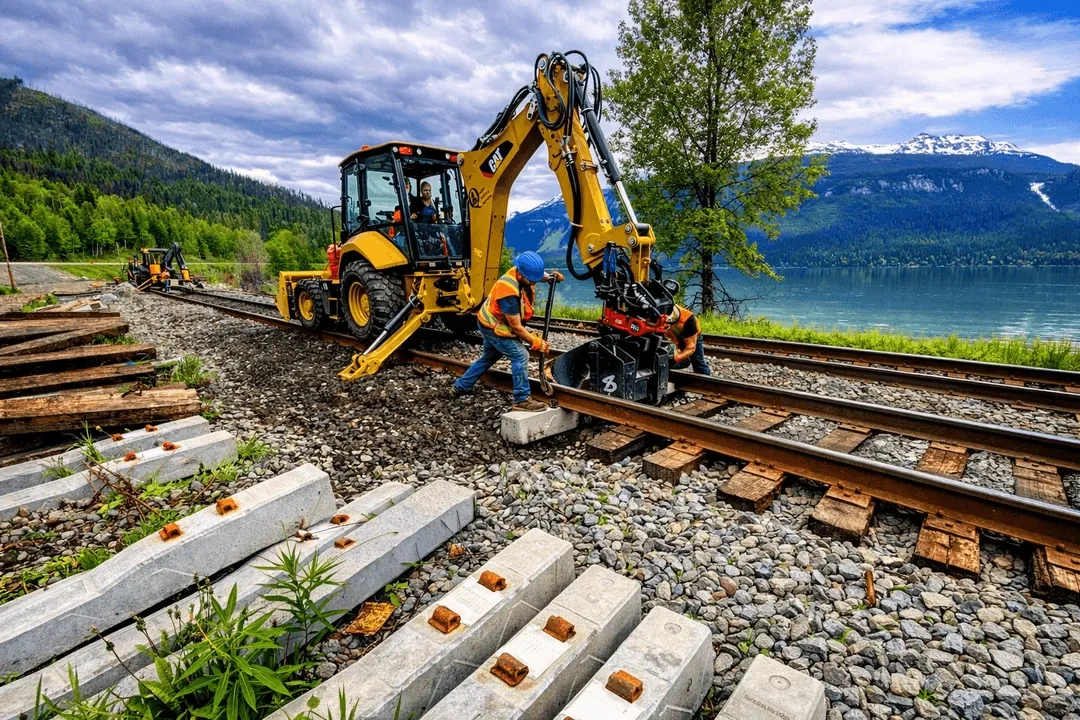
Choosing the wrong railroad ties (also known as railway ties, train track ties, or cross ties) for an industrial track project causes fast track deterioration, unexpected derailments, and early capital costs. Selecting ties for an industrial siding, plant yard, shortline, or transit corridor requires balancing initial cost against total lifecycle performance under heavy axle loads.
This guide breaks down wood, concrete, steel, and composite cross ties to help site managers, civil engineers, and track operators choose the right material for their facility.
1. Creosote-Treated Hardwood Ties
Pressure-treated hardwood ties remain the standard railroad ties wood type for industrial spurs, yards, and shortlines across North America.
- Best Uses: Standard industrial sidings, switching yards, shortline tracks, and sharp curves requiring flex.
- Standard Railroad Tie Dimensions: Industrial standard timber ties measure 7 inches thick by 9 inches wide by 8.5 feet long. Longer rail switch ties (ranging from 9 to 16+ feet) are installed under turnout assemblies.
- What Are Railroad Ties Treated With? They are pressure-treated with creosote oil or copper naphthenate to protect the wood grain from biological rot, moisture, and insect damage.
- Average Lifespan: 20 to 30 years depending on drainage and ballast condition.
- Key Advantages: Wood ties are cost-effective up front, easy to install with standard track maintenance equipment, and forgiving on uneven track beds.
- Drawbacks: Wood rots over time in wet ballast and splits during extreme winter freeze-thaw cycles.
For private plant operations, specifying Grade 1 or Industrial Grade wood ties provides the right strength without paying high mainline prices. When replacing failed timber ties, scheduling a systematic tie-changing project restores proper track gauge and prevents rail spreading under load. (Not sure if your track needs spot tie replacement or a total overhaul? Read our guide on Track Repair vs. Track Renewal: How to Know Which Your Railway Needs).
2. Concrete Railroad Ties
Concrete ties are built for heavy-tonnage corridors and precision transit lines that demand maximum stability.
- Best Uses: High-tonnage mainline tracks, heavy industrial loading zones, direct fixation transit systems, and light rail corridors.
- Standard Concrete Tie Sizes: Concrete ties generally measure 8.5 to 9 feet in length, with a deeper, wider profile than wood to distribute severe wheel loads.
- Average Lifespan: 40 to 50+ years.
- Key Advantages: Concrete ties maintain exact gauge under extreme axle loads, hold up against environmental decay, and reduce overall line deflection.
- Drawbacks: High upfront material and installation costs, heavy weight requiring specialized machinery, and susceptibility to cracking if sub-grade drainage fails.
Railroad concrete tie maintenance requires keeping sub-ballast clean, inspecting elastic fastener clips, and replacing worn rubber pads to prevent concrete abrasion under heavy tonnage. Industrial operators managing heavy chemical or grain traffic often install concrete ties in high-stress loadout loops.
3. Steel Railroad Ties
Steel ties offer a lightweight, ultra-durable alternative for facilities facing environmental or physical track restrictions.
- Best Uses: Tunnels, yards with height restrictions, areas with contaminated soil, or sites with strict creosote environmental limits.
- Average Lifespan: 30 to 40 years.
- Key Advantages: Steel ties require less ballast depth, install quickly, and are 100% recyclable. They do not leach chemicals into surrounding soil.
- Drawbacks: Higher initial material cost than wood and potential for rust in acidic or poorly drained soils.
Steel ties work well in tight industrial yards where track bed depth is limited. When sourcing complete hardware assemblies, including b2b suppliers of railroad tie plates, fasteners, and insulation pads, steel systems require proper electrical isolation if signal track circuits are active.
4. Composite (Plastic) Railroad Ties
Composite ties made from recycled plastics are gaining traction in wet or corrosive environments.
- Best Uses: Ports, chemical plants, rail crossings, and locations with heavy standing water.
- Average Lifespan: 30 to 50 years.
- Key Advantages: Impervious to water, rot, insects, and industrial chemicals. They use the same spike and fastener hardware as traditional wood ties.
- Drawbacks: Higher upfront cost and less track record under heavy, continuous freight traffic compared to hardwood or concrete.
Material Comparison Summary
How to Determine When Ties Need Replacement
A track bed only works as well as its supporting ties. Broken or rotted ties lead to wide gauge defects, line sinking, and carrier rejections from Class 1 partners like CN or CP.
Watch for these warning signs:
- Plate Cutting: The tie plate digs deep into the wood, loosening spikes and widening track gauge.
- Center Splitting: Deep vertical cracks running through the spike holes.
- Ballast Pumping: Mud or water squirting up around the tie when trains pass, indicating the tie is loose and sub-grade drainage has failed.
- Concrete Cracking: Hairline or structural fractures near the rail seat on concrete ties.
Catching these defects early through routine certified track inspections keeps your facility compliant and operational without needing emergency shutdowns.
Plan Your Track Maintenance and Upgrade Strategy
Selecting the right tie material depends on your yard traffic, axle weights, and maintenance budget. While wood ties remain the flexible choice for standard switching, concrete and steel provide long-term reliability for heavy industrial facilities.
Need an evaluation of your existing track infrastructure or a quote on tie replacement? Contact the certified team at Quality Railway Services to schedule an on-site track assessment or tie-cycling proposal. Selecting the right railway tie material depends on your yard traffic, axle weights, and maintenance budget. While wood ties remain the flexible choice for standard switching, concrete, steel, and composite ties provide long-term reliability for heavy industrial facilities.
Need an evaluation of your existing track infrastructure, sourcing for tie plates and hardware, or a quote on tie replacement? (Learn how to choose the right industrial railway contracting company for your next project, or contact Quality Railway Services today).

Ready to work with Quality Railway Services?


