
Track Repair vs. Track Renewal: Which Does Your Railway Need?
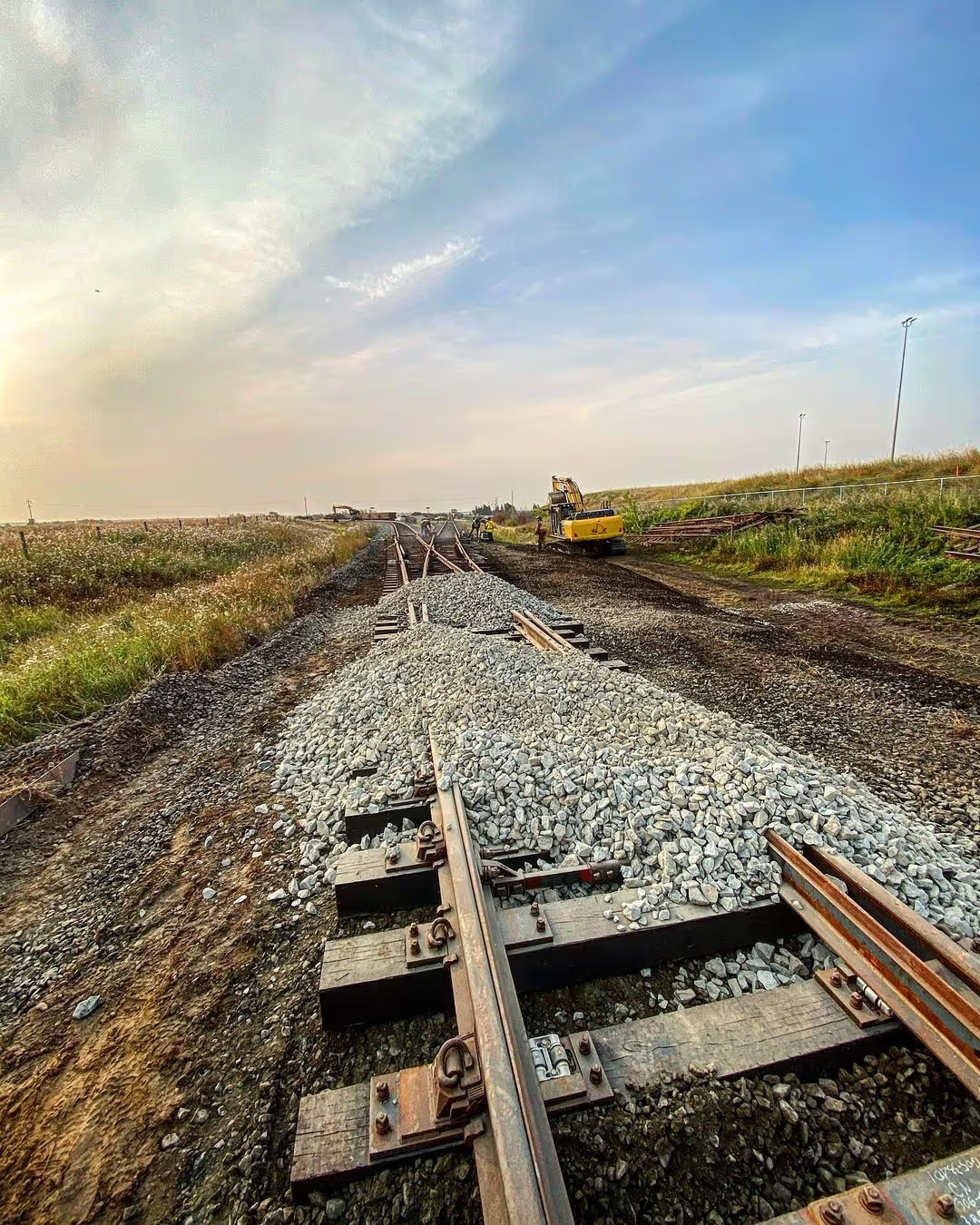
Railway operators make this call wrong all the time, and it burns through operational budgets.
They keep patching a section that needs full renewal. Repair bills add up fast until a derailment or Transport Canada shutdown forces their hand. Other times, they spend big money on a full track replacement when targeted train track maintenance would have added another ten years of life to the line.
Both mistakes drain money. One puts crews in danger.
What Track Repair Covers
Routine railroad track repair targets specific, isolated defects. The job stays small in scale. The goal is simple: get a single section or part back into safety compliance without tearing up the surrounding track structure.
Common railway track maintenance and repair include:
• Tie Replacement (Spot Cycling): Pulling and replacing individual rotten or cracked ties. This works when bad ties are scattered rather than clustered together.
• Thermite Welding: Fixing cracked rails, broken joint bars, or damaged rail heads directly on site with a weld instead of pulling out long sections of track.
• Segmental Rail Changing: Swapping out one or two short panels of rail when deep defects cannot be welded out.
• Spot Ballast Maintenance: Adding fresh stone, leveling it, or cleaning out dirt in clogged spots to keep water moving away from the line.
• Fastener & Anchor Servicing: Tightening loose spikes, replacing cracked rail anchors, and resetting missing clips to hold rail alignment.
When to choose track repair: Spot repairs make sense when defects are isolated, the underlying subgrade stays solid, and repair costs stay low compared to the remaining life of the surrounding track. (To catch issues early, review our guide on 5 Critical Defects That Signal Your Industrial Rail Spur Needs Immediate Repair).
What Track Renewal Means
Track renewal or track rehabilitation means tearing out and replacing primary structural components down a line: rails, ties, ballast, and sub-ballast. You do not order a renewal just because track looks old. You order it when the line can no longer hold a safe operating standard without constant spending.
4 Specific Triggers for Full Track Renewal & Rehabilitation
- Tie Density Failure (>30% Defective): Transport Canada rules link tie condition directly to allowed train speed. On Class 1 lines, three bad ties in a row trigger a mandatory slow order. When over 30% of ties in a 100-meter section rot out, spot replacement fails economically. You end up rebuilding the line one tie at a time at double the cost.
- Rail Worn Past Serviceable Limits: Once steel rail wears past Transport Canada thickness limits, it loses structural strength. Field welds stop holding up under heavy loads. Welding worn steel is just a short-term patch on a failing asset.
- Geometry That Won't Hold Alignment: If crews surface a line and it drops out of alignment again a few weeks later, the surfacing tool is not the issue. The ground underneath has failed. Fix that line with a full renewal, including subgrade rebuilds.
- Repair Costs Outpace Renewal Value: When annual emergency fixes and constant spot repairs cost more per year than financing a complete rebuild, the math tells you to renew.
How Often Are Railroad Tracks Replaced?
Track owners frequently ask how long a set of rails lasts before full replacement.
Tracks do not come with a fixed expiration date. High-tonnage mainlines carrying heavy freight every hour might need new rail every 10 to 15 years. Low-speed industrial spurs and sidings can last 30 to 40 years with steady care.
How often do railroad tracks need to be replaced?
Steel rail life spans vary from 15 to 50+ years depending on gross tonnage, maintenance quality, and curve severity. Low-tonnage industrial tracks last significantly longer than high-density mainlines.
How often are railroad ties replaced?
Creosote wooden ties last 20 to 30 years on average. However, harsh Western Canada freeze-thaw cycles accelerate wood decay and ballast heave, requiring regular spot tie cycling or full replacement every 15 to 25 years.
Average component lifespans:
• Creosote Wooden Ties: 20 to 30 years (harsh frost speeds up decay).
• Steel Rails: 15 to 50+ years depending on gross tonnage and curve severity.
• Ballast & Subgrade: Needs deep cleaning or complete rehab every 15 to 25 years to protect drainage.
Why the Canadian Regulatory Context Matters
Transport Canada sets safety rules for all federally regulated railways. Under the Railway Safety Act, those standards apply directly to private industrial spur owners, creating personal liability for site managers.
U.S. Federal Railroad Administration (FRA) guides miss key Canadian legal requirements. On top of that, Western Canada freeze-thaw cycles destroy ballast and heave subgrades in ways Southern climates never see. A line that stays level in August can easily fail a safety inspection come April.
How QRS Helps You Make the Right Call
Deciding between a quick repair and a full track rebuild takes hard data:
- Certified Track Inspections: Qualified inspectors walk your line, logging defects and assessing track class.
- Targeted Track Maintenance: Field crews handle tie cycling, thermite welding, joint work, and track surfacing across Alberta, BC, and Saskatchewan.
- Turnkey Track Renewal: When a full rebuild makes financial sense, QRS brings in the heavy equipment, crews, and materials to construct new line.
- 24/7 Emergency Response: When a derailment or out-of-service order halts operations, emergency crews deploy right away.
Unsure if your line needs a spot fix or a full rebuild? Contact Quality Railway Services today to schedule a certified track inspection across Western Canada.
Ready to work with Quality Railway Services?


